
A half-hearted European agreement
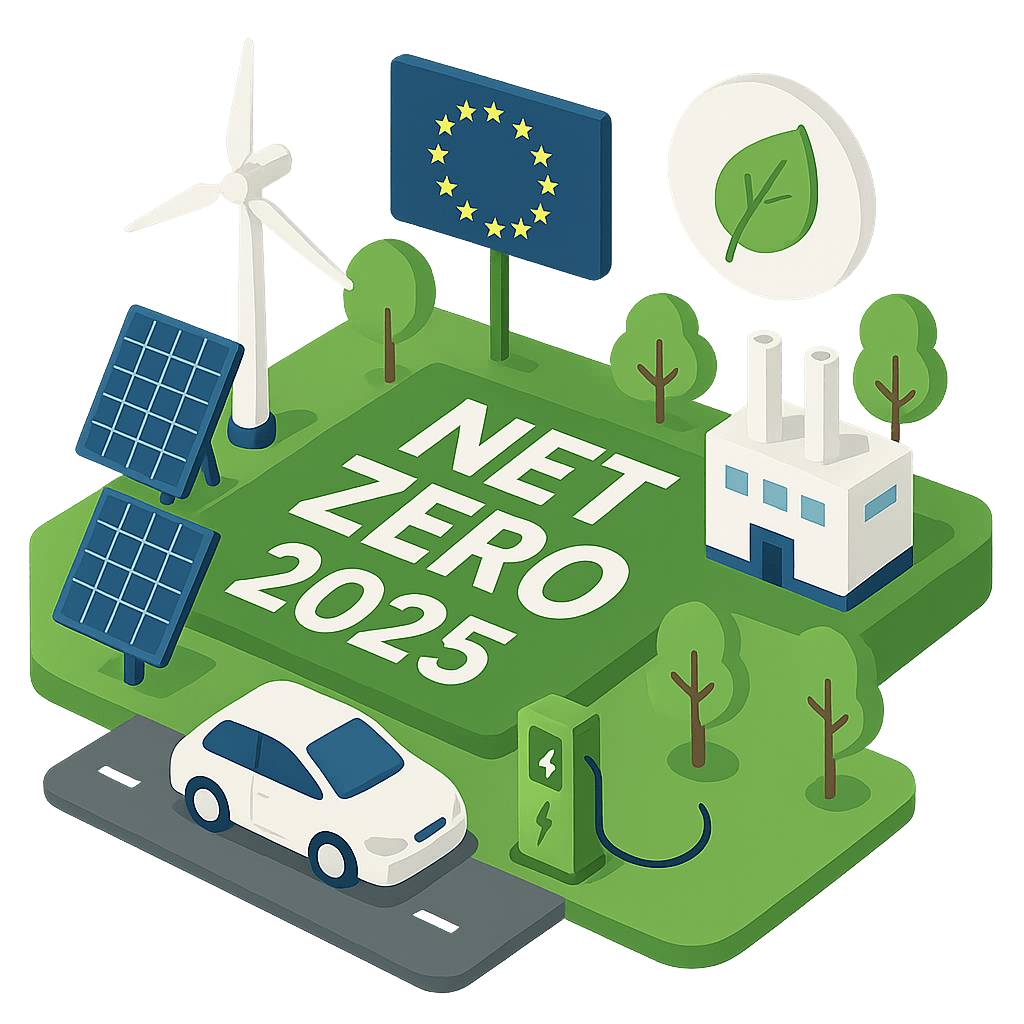
On November 5, 2025, European Union member states reached an agreement on their climate targets for 2040 after lengthy negotiations (Le Monde).
The stated objective: a reduction of –90% in net greenhouse gas emissions by 2040 compared to 1990. An ambitious goal, but achieved through many concessions: increased flexibility for certain states, extended deadlines, and differentiated commitments by sector.
From Paris (2015) to Brussels (2025): ten years of transition… or hesitation?
In 2015, the Paris Agreement signed at COP21 established clear foundations:
- Limit warming to well below +2°C,
- and strive to stay at +1.5°C (Paris Agreement on Climate, United Nations).
Under the presidency of Laurent Fabius, COP21 succeeded in aligning science, civil society, and states around a common ambition. Ten years later, the assessment is mixed: national trajectories are far from homogeneous, and real efforts are often postponed.
As Laurent Fabius recently reminded us in Le Monde,
"We must remind states of their climate duties; these are the very conditions for humanity's survival."
The time for promises has passed
The 2020–2030 decade was meant to be the implementation phase.
However, according to the 2024 report by the United Nations Environment Programme (UNEP), current policies are leading us toward warming of 2.7°C by the end of the century.
The Global Carbon Project confirms that global CO₂ emissions reached a new record in 2024.
The time is therefore no longer for negotiation, but for action.
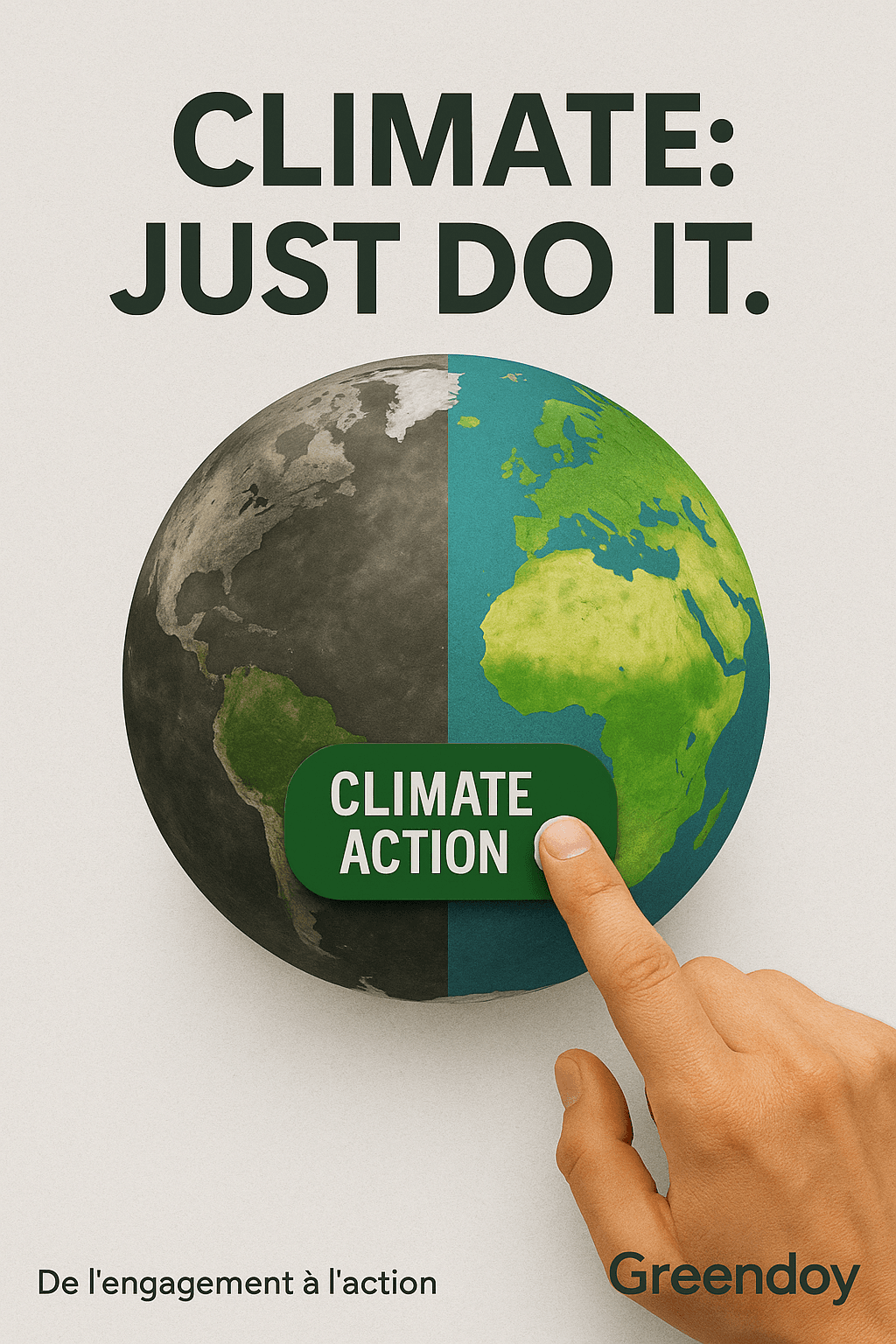
It is in this spirit that we say: "Climate: Just do it."
For companies: concrete action
Economic actors have a major role to play.
For SMEs, mid-sized industrial companies, and purchasing, quality, or CSR departments, this means:
🎯 Review their emission reduction targets
In light of new European frameworks (CSRD directive, Green Taxonomy, CBAM).
📊 Implement reliable monitoring indicators
Based on frameworks such as the GHG Protocol or ISO 14064 standard.
⚙️ Identify operational levers
- Responsible purchasing
- Energy transition
- Logistics optimization
- Process efficiency
🤝 Integrate climate dimension into overall strategy
From governance to the value chain.
Greendoy: from strategy to impact
At Greendoy, we support companies in this essential transition from commitment to operational implementation.
Our approach is based on three pillars:
Pragmatism
Achievable and measurable action plans.
Method
Alignment with international standards and regulatory expectations.
Profitability
Demonstrating that environmental performance can strengthen competitiveness.
Conclusion
Because the future is not negotiated: it is built.
🟢 Greendoy – Just do it.
Supporting companies toward sustainable, measurable, and concrete performance.
📚 Sources
- Le Monde – European climate agreement
- UNFCCC – Paris Agreement
- UNEP – Emissions Gap Report 2024
- Global Carbon Project 2024
- European Commission – CSRD Directive and Green Taxonomy
Contact us to take action today.